
Lake City Criminal History Checks
Lake City does not publish a police arrest blotter, public incident-report search, or report-request form. That makes telephone and clerk contact central, not secondary. First decide whether the needed item is the police narrative, a warrant or summons tracked by the department, a Municipal Court case, a county booking, or a state repository history. The offices hold different facts and may update on different schedules.
- Call Lake City Police at 843-374-5421 and ask the Telephone Response Unit to confirm the proper report or warrant contact.
- Describe the event, date, location, report type, and any known incident or ticket number when seeking a city police record.
- Contact Lake City Municipal Court at the same main number, extension 402, for a city case file, docket, warrant, judgment, or order.
- Check Florence County's current and three-month released custody feeds if the Lake City event may have led to county detention.
- Use Florence Public Index for participating filed cases and SLED CATCH when a broader South Carolina repository report is needed.
Follow the Lake City arresting or issuing agency rather than the incident location alone. The county Florence County criminal history channels add depth when a Lake City search reaches booking, General Sessions, or state history.
Lake City TRU Record Routing
The Telephone Response Unit is Lake City's distinctive front door. According to the official police page, TRU works 23 hours a day, seven days a week. It receives calls and messages, takes reports, supports NCIC work, tracks and validates warrants and courtesy summons, coordinates property checks and on-call notifications, and backs up E-911.
That broad Lake City role does not mean every Lake City report copy is available at once. Taking a Lake City report differs from reviewing it for public release. NCIC is a law-enforcement system, not a public database. Ask Lake City TRU who holds the finished record, whether it is complete, and what public-record channel applies. Retain the report or ticket number for the next call.
TRU also tracks and validates warrants and courtesy summons for police work. That does not make its NCIC access a public Lake City warrant-name portal. To verify a warrant, use the police main line and the court that may have issued it. A courtesy summons may create a court record without a county booking, which is another reason not to rely on the detention feed alone.
Records at the Lake City Police Department
Lake City Police keeps the reports its officers create. Chief Patrick Miles is listed at extension 507, but the main records path begins at 843-374-5421 and TRU. No official public blotter, report search, dedicated record form, or separate copy-fee schedule was found. That exact gap should be stated plainly because a missing web tool does not mean a Lake City report is not public or does not exist.
Official Lake City pages disagree on whether the Police/Judicial complex is 202 or 204 Kelley Street. Call Lake City before visiting. Use the address the specific office confirms instead of treating one Lake City page as proof the other is wrong. The police source is shown below, drawn from the Lake City Police Department page.
The image marks the official city source and reinforces why the main line, rather than an unverified third-party index, is the right place to begin.
Lake City Police Address Check
The 202 versus 204 Kelley Street conflict is a practical records issue. The Municipal Court page gives 202 Kelley Street, while another official city source calls the Police/Judicial location 204 Kelley Street. Both are city sources, so the safe response is not to invent a correction. Call 843-374-5421, name the police or court office, and ask which entrance or mailing address applies.
This small Lake City step can prevent a missed counter visit. It also shows why Lake City record access depends on the Lake City office, not just a street number copied from a search result. The Municipal Court's mailing address is separately published as PO Box 1329.
Keep the two Kelley Street numbers visible when asking for directions. State whether the request is for Lake City Police or Municipal Court, then use the address that office confirms. The court's post office box is a published court mailing route. Official city sources do not identify it as the police report address, so court mail should not be assumed to reach the Lake City police custodian.
Booking and Arrest Records in Lake City
Official SLED releases confirm that some Lake City investigations lead to Florence County Detention Center booking and Twelfth Circuit prosecution. The county roster has also shown Lake City Police as an arresting agency. That supports a city-to-county chain, but a citation or other police event with no detention can be absent from the roster.
Search the FCSO current-custody feed first, then its separate released-inmate search for the preceding three months. Use the displayed Lake City arresting agency to route the report request back to Lake City. The roster may show identity, booking time, charge label, status, and agency, but it does not supply the full Lake City narrative, probable-cause account, bond, warrant, or court date in the inspected layout.
Note: A Lake City booking is evidence of custody, not proof that the listed allegation led to a conviction.
Trace a Lake City Arrest
Begin with the Lake City police report when Lake City officers handled the event. Next, check the county roster for Lake City custody and note the Inmate ID and charge status. Then use the Lake City or county court file to see whether a prosecutor changed the booking charge, dismissed it, or obtained a conviction. Those three Lake City records can disagree without any one being false because each Lake City record captures a different stage.
“Pre-Trial” is an unresolved custody label. It is not a verdict. If a booking is older than the released feed's three-month window, request older sheriff-held booking material through FCSO Records or NextRequest. Full county arrest routes are covered by the Florence County arrest search.
Identifiers must also stay separate. The county Inmate ID belongs to the detention entry, while a Lake City ticket, report, warrant, and court case can each use another number. Carry all known numbers when moving between TRU, the Municipal Court clerk, and FCSO. A blank search under the wrong identifier does not prove that the Lake City record was never made.
The Lake City Municipal Court File
Lake City Municipal Court publishes a city-specific inventory that is more useful than a generic case-search claim. Its clerk maintains case files, dockets, warrants, subpoenas, judgments, and orders while processing criminal and traffic matters. The official court page is a payment and contact route, not a public name-based docket search.
| Court Name | Lake City Municipal Court, 202 Kelley Street |
|---|---|
| Case Types Heard | City criminal and traffic matters within municipal authority |
| Case Lookup Channel | Court clerk at 843-374-5421 ext. 402; participating records may also appear in Public Index |
| What the File Holds | Case files, dockets, warrants, subpoenas, judgments, and orders |
| Copies & Fees | No official criminal-record copy fee was verified; ask the clerk for current terms |
The court's official source is pictured below. It comes from the Lake City Municipal Court page.
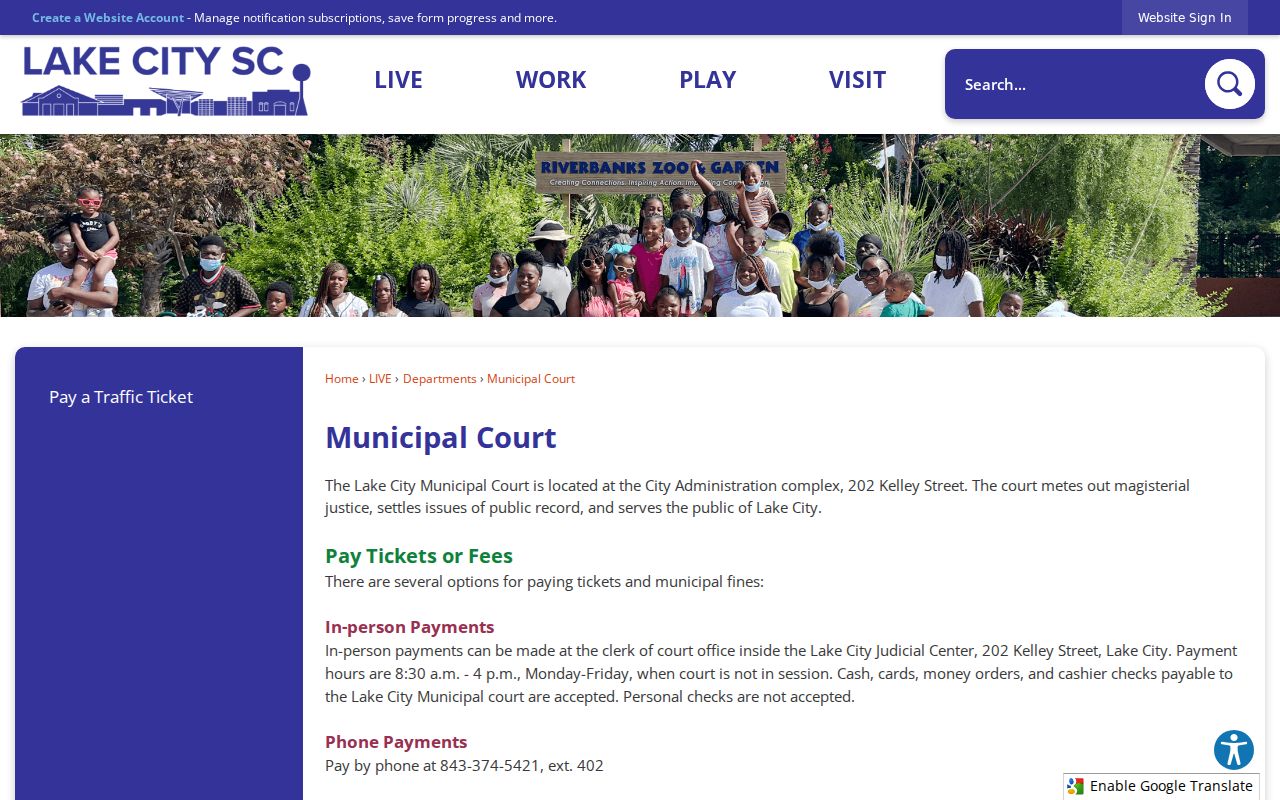
Use that source to reach the clerk and payment service, while keeping in mind that a payment control is not a Lake City case search.
Lake City Ticket Payment Records
The payment counter generally operates from 8:30 a.m. to 4 p.m. on weekdays when court is not sitting. It accepts cash, cards, money orders, and cashier's checks, but not personal checks. Mail payments require a cashier's check or money order with the person's name and ticket number on the memo line. Cash and personal checks should not be mailed.
Those Lake City rules help apply money to a known ticket. They do not let a user search Lake City records by name, read the Lake City docket, or confirm the final judgment. PayThatTicket is a payment vendor, not a public case index. Contact the Lake City clerk when the goal is the case record rather than payment.
How Lake City Records Reach the County
Lake City Police keeps the incident or arrest narrative. Florence County detention creates a booking when county custody occurs. The city clerk keeps municipal matters, while serious charges may proceed through General Sessions. A qualifying fingerprinted arrest should be reported to SLED, and the later court outcome should return to the repository.
Record flow: Lake City Police Department › Lake City Municipal or Florence County Courts › South Carolina Law Enforcement Division
This Lake City path does not make SLED CATCH a copy of the Lake City file. CATCH is South Carolina-only, rests on reported fingerprint-linked cycles, excludes wanted data, and does not include a registry search. A CATCH no-record response does not disprove a Lake City report, booking, or court file.
Lake City Police Program Context
Patrick Miles was promoted to police chief in March 2024, with Dedrick Graham promoted to major. In July 2025, Lake City's Youth Intervention and Development and Teen Open Gym event drew more than 100 youth and adults, with mentoring and gun-violence prevention among its aims. Those are official local milestones, not individual criminal-history data.
They help explain the Lake City department's current community role while leaving Lake City record custody unchanged. A program contact cannot release a police report in place of the official Lake City channel, and an event count cannot support a claim about any Lake City resident. Use the main police line for a report and the Lake City clerk for a filed case.
Lake City lists Chief Miles at extension 507. TRU remains the broader front door described by the department. That distinction keeps a routine record request from being framed as a need to contact command staff. Ask TRU to route an incident record, and reserve the court extension for a Lake City docket, warrant, judgment, or order that the clerk maintains.
Lake City Records Geography
Lake City was settled in 1734 and later became known for agriculture and the Bean Market. The 1936 Public Works Administration market became a green-bean auction hub and is now a restored cultural venue. Lake City also sits at the meeting of US 52, US 378, and SC 341, about 23 miles south of Florence.
Those roads can bring city, county, or state officers into the same area. The officer's agency still decides who owns the report. The official Lake City history source supplies the image below.
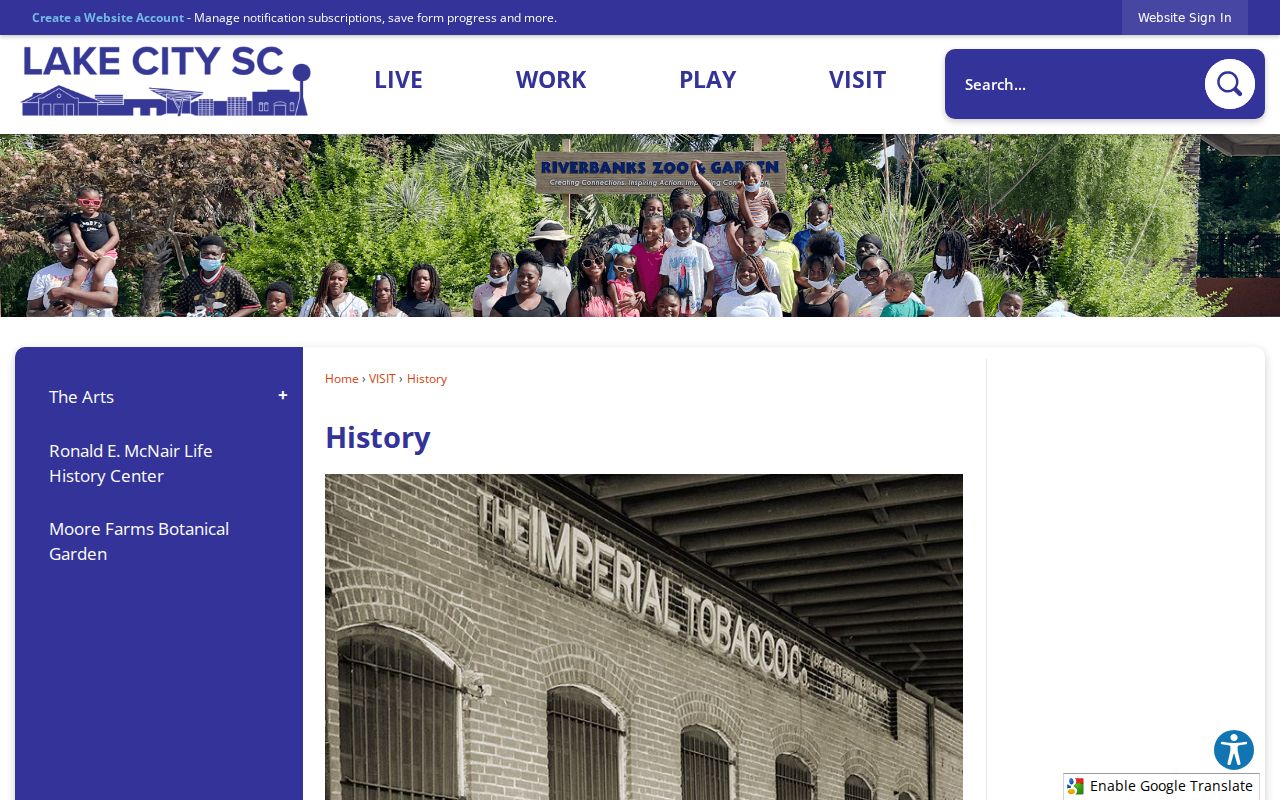
The local scene gives context to Lake City's civic center, while a records request must still follow the actual custodian.
The official Census profile estimates 5,940 Lake City residents as of July 2025. That figure helps describe the scale of the municipal records system. It should never be used to infer criminal conduct or explain whether a particular record exists.
Lake City Record Access Rules
The South Carolina Freedom of Information Act supports access to releasable Lake City public records, but it does not override juvenile confidentiality, expungement, privacy redaction, or investigative exemptions. A city police report may lose protected victim, witness, or active-investigation details. Court files are governed by court access rules and may also have restricted content.
Key Statutes:
South Carolina Freedom of Information Act, §§30-4-10 through 30-4-40 permits inspection and copies subject to exemptions and actual-cost fees.
South Carolina Code §23-3-120 requires qualifying arrest fingerprint and criminal-history reporting to SLED.
South Carolina Code §§17-22-910 through 17-22-950 set the rules for eligible expungement and destruction of arrest records.
A focused Lake City request should identify the police or court office, record type, date range, and known incident, ticket, or case number. No official police copy fee or fixed report-release schedule was verified, so ask the city for current cost and timing.